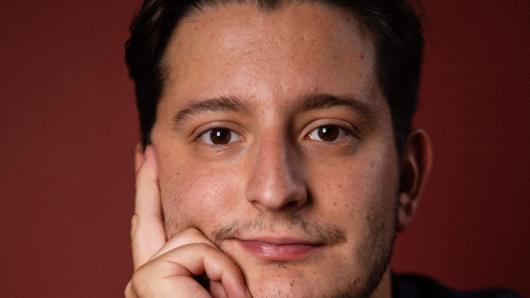
When we got to the lectures on the Ohrid Framework Agreement, some of my fellow students described it as a capitulation of the state. The word struck me as strange, not only because I saw the Agreement differently, but also because I belong to a generation that did not experience the conflict itself. I was born in May 2002, just a few months after the Agreement was signed. This means that I have no personal memories of 2001, only stories I have heard, inherited interpretations, and a state shaped by the compromise that followed.
Out of curiosity, I asked them why they considered it a capitulation. Although their answers were phrased differently, they almost always came down to the same idea: 2001 was the moment when Albanians had begun “taking the state into their own hands,” as if something that had previously belonged exclusively to Macedonians had suddenly been taken away from them and given to Albanians. The Agreement was therefore perceived not as a compromise that saved the state from a deeper conflict, but as a defeat.
That was when I realised that the problem was far greater than a debate among students. We, the generation that did not experience the conflict, had not inherited the memory of its consequences, which might have helped us understand what had brought the country to 2001, but many of the prejudices, fears, and interpretations that had preceded it.
The Theory of Postmemory in Interpreting the OFA
Scholar Marianne Hirsch uses the term “postmemory” (1) to describe a generation that has not experienced a trauma firsthand, but grows up with the memories, stories, and interpretations of those who have, to the point where the past begins to shape the memory of those who were not there. Perhaps this concept best describes the post-2001 generations and our relationship with the year 2001: we do not remember the conflict ourselves, but we have grown up with other people’s memories of it, transmitted through our families, communities, schools, and politics. The problem is that an Albanian and a Macedonian born in the same year, in the same country, and perhaps just a few kilometres apart, can inherit entirely different memories of the same event. The question, therefore, is not only what we know about 2001, but whose memories of it we have inherited.
If we do not know why a right was established, it can easily appear to us as a privilege. If we do not know why mechanisms were created to prevent exclusion, they may seem unnecessary. And if we have no personal memory of where political language filled with fear, exclusion, and ethnic hostility can lead, then that same language may sound entirely harmless when it reappears.
In this gap in collective memory, politics has a much easier task. It is enough to tell a young Macedonian that Albanians “got too much” after 2001, or a young Albanian that “nothing has changed” since 2001, and both will eventually grow up feeling that their own community has lost something and that the other community has benefited at its expense. Meanwhile, political parties continue to feed this sentiment because a divided society is much easier to mobilise and control.
This is why the way we learn history matters far more than we might think. Schools and universities should not be places where younger generations inherit the fears of older ones, but spaces where we learn to understand the history of others and are given the opportunity to recognise that no conflict begins on the day the first shot is fired.
If, 25 years later, a student can leave a lecture convinced that the Ohrid Framework Agreement was simply “the capitulation of the state,” without being asked what brought the country to that point, what forms of exclusion existed before 2001, and why a considerable part of the population did not feel that the state belonged to them, then we are facing a problem not only with how history is interpreted, but also with how we are building the future.
Because, ultimately, to whom was the Ohrid Framework Agreement a capitulation? It did not dismantle the state, divide its territory, or call its borders into question. Instead, it reaffirmed the country’s unitary character while demanding that the multi-ethnic reality of society be reflected in public life. What came to an end with the Ohrid Framework Agreement was not Macedonia itself, but the idea that it could function as the political property of one community while simultaneously demanding unconditional loyalty from everyone else.
Of course, this does not mean that the way the Ohrid Framework Agreement has been implemented over the past 25 years should not be criticised. Equality has often been exploited to justify politically motivated appointments, representation has been reduced to numbers, and ethnic affiliation has been used as a mechanism for dividing institutions among political parties. Political elites on both sides have quickly realised that managing division is easier than overcoming it.
Nevertheless, the abuse of a principle does not make the principle itself wrong, and the misuse of the Ohrid Framework Agreement is not an argument against the need for it, but rather an argument against those who transformed the spirit of equality into an instrument of political clientelism.
The paradox is that, 25 years later, one of the greatest risks lies precisely in the fact that my generation has grown up in peace. When you are born and raised in a society without armed conflict, it is easy to begin taking peace for granted as the natural state of things, forgetting that it is the result of political decisions, compromise, courage, and restraint. Over time, the rights secured in the aftermath of conflict may begin to look like excessive privileges, the institutions established to prevent exclusion may seem unnecessary, and the language of the past may appear harmless, precisely because we commemorate the Ohrid Framework Agreement more often than we truly understand it.
Ultimately, for our parents, 2001 was the year of conflict, while for my generation, it is a story we have inherited without having lived through it ourselves. And it is precisely for this reason that our responsibility is no smaller, but perhaps even greater. We cannot change the memories we have been given, but we can choose what to do with them.
Therefore, I conclude this article with the hope that, perhaps, by the 50th anniversary of the Ohrid Framework Agreement, its true success will no longer be measured by how long we have continued to talk about it, but by whether the principles that made it necessary — equality, dignity, and belonging — will have become so deeply rooted in our society that we will no longer need to treat them as a compromise between Albanians and Macedonians, but simply as the normal way a shared state functions.
(1) Hirsch, M. (2008). The generation of postmemory. Poetics Today, https://warwick.ac.uk/fac/arts/history/research/centres/ehrc/research/current_research/memory/poetics_today-2008-hirsch-103-28.pdf