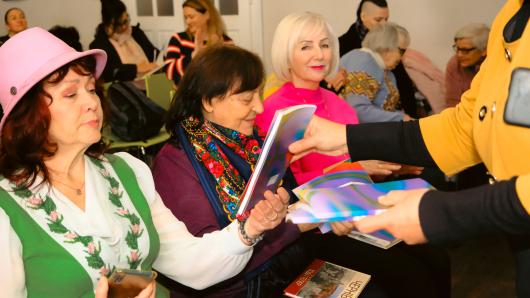
How Do We Remember? Women in Chernivtsi Share Their Stories of a Changing Ukraine
A new publication brings together women's personal memories of more than three decades of change in Ukraine.
On 3 November, the Chernivtsi branch of IT Grannies, in cooperation with Pro Peace, published How Do We Remember?, a booklet containing eight personal stories from senior women in Chernivtsi and the wider Bukovina region. The publication brings together memories of family life, work and personal experiences during some of the most turbulent decades in Ukraine's recent history.

Looking Back Through Personal Memories
The project documented the personal memories and experiences of eight women aged 65 and over who had lived through the country’s social and political transformations. Rather than reconstructing historical facts, we explored memory itself: what remains after decades of change, how personal and collective histories intertwine, and how memories may shift when viewed from the perspective of the ongoing war. The continuity of the group of participants helped build trust and enabled deeper conversations and reflection.
The memories covered different periods of Ukraine’s recent history: the collapse of the Soviet Union, the first years of independence, the economic and social challenges of the 1990s, the Orange Revolution, the Revolution of Dignity, the occupation of Ukrainian territories, and the full-scale Russian invasion. The stories also touched upon deeply personal themes: individual experiences of historical change; uncertainty and adaptation to new circumstances; care and responsibility for loved ones; the meaning of home, safety and belonging; and the ways women maintain their sense of identity and agency during periods of upheaval.
Beyond sharing their experiences, participants brought different perspectives, emotions and interpretations to the process. This demonstrated that collective memory consists of individual voices rather than a single, unified account of the past. The participants emphasised the value of sincere personal conversations, mutual support, solidarity, and the opportunity to discover or reconsider aspects of their own experiences. The participatory process fostered dialogue, mutual recognition and a sense of connection among women from different backgrounds and generations. The publication, in turn, created a tangible record of their voices and creative contributions.

Remembering the Past While Living Through War
Looking back takes on a different meaning when the present is marked by war. For the women sharing their stories, memories of earlier periods of uncertainty, social change and personal challenges are now viewed against the reality of Russia's full-scale invasion.
Their experiences remind us that history is not only something recorded in books or official documents. It also lives in people's memories, in the decisions they made, the difficulties they faced and the ways they adapted to change.
Giving space to these personal accounts is particularly important at a time when communities are dealing with loss, displacement and uncertainty about the future. Listening to different generations helps us understand not only what people have experienced, but also how those experiences shape their sense of belonging today.
Eight Stories for Others to Discover
The publication brings these eight stories together and makes them accessible to a wider audience. It offers readers an opportunity to discover Ukraine's recent history through the voices of women whose personal experiences are part of that history.
For Pro Peace, cooperation with IT Grannies reflects the importance of creating opportunities for people to share their experiences, listen to one another and contribute to how their communities remember the past.
How Do We Remember? is a reminder that personal stories deserve to be heard and preserved, not only for those who lived through these events, but also for the generations that follow.
